 squishy
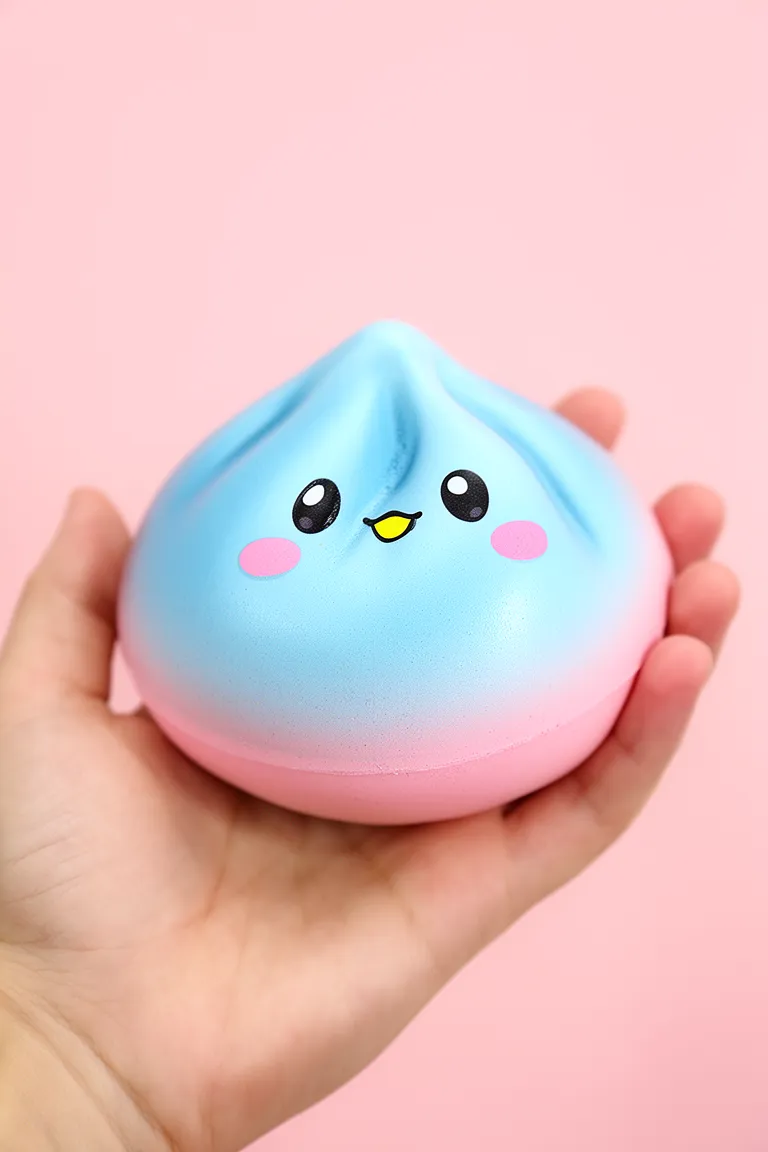
The fastest way to coax a squashed kawaii squishy back into its original shape is to warm the foam gently, massage it with your fingertips, and then leave it to rest on a flat surface. For most slow-rise dumpling squishies, a 10-minute soak in comfortably warm water followed by a soft towel press and air drying restores the plump bao silhouette without killing the slow-rise bounce. Deep dents from heavy storage may need a short warm-water treatment and a very cautious low-heat hairdryer pass. Never use boiling water or yank the foam hard, because slow-rise foam recovers gradually and can split if forced.
Know Your Squishy: Why Shape Loss Happens

Slow-rise foam is designed to bounce back slowly after you squeeze it, but repeated squashing can compress the tiny air pockets inside the material. If a squishy is left under a stack of books, squashed in a bag or stored with heavy items on top, the foam may hold that dent for longer than usual. That does not mean your squishy is ruined. The foam is simply stuck in a compressed state and needs a little help to relax back into its moulded shape.
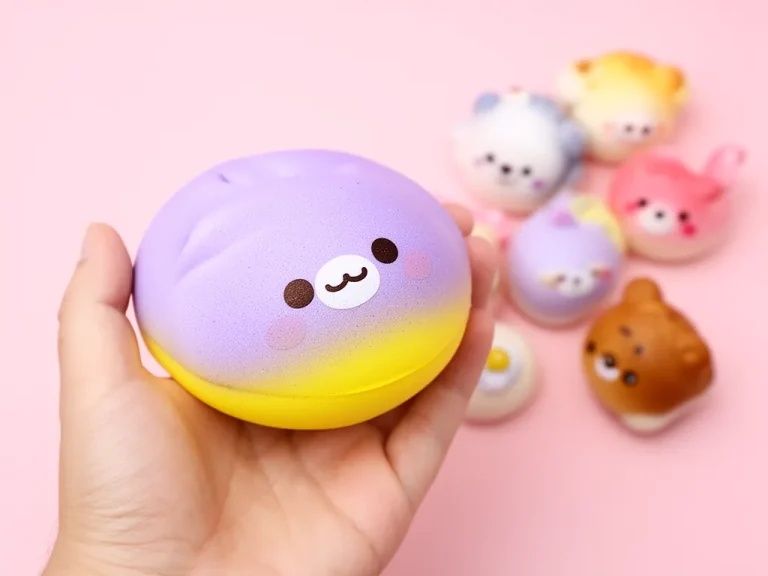
The method you choose depends on the type of squishy you own. Classic round dumplings usually have one smooth, continuous foam surface, so they respond well to massage and warm water. Squishies with complex details, printed faces or added glitter need a gentler touch, because hard scrubbing can lift the finish. Before you begin, look at the surface: if you see a crease rather than a deep fold, start with the dry massage method. If the whole side is flattened, move to the warm water soak.
The Gentle Reset: Massage and Rest Without Water
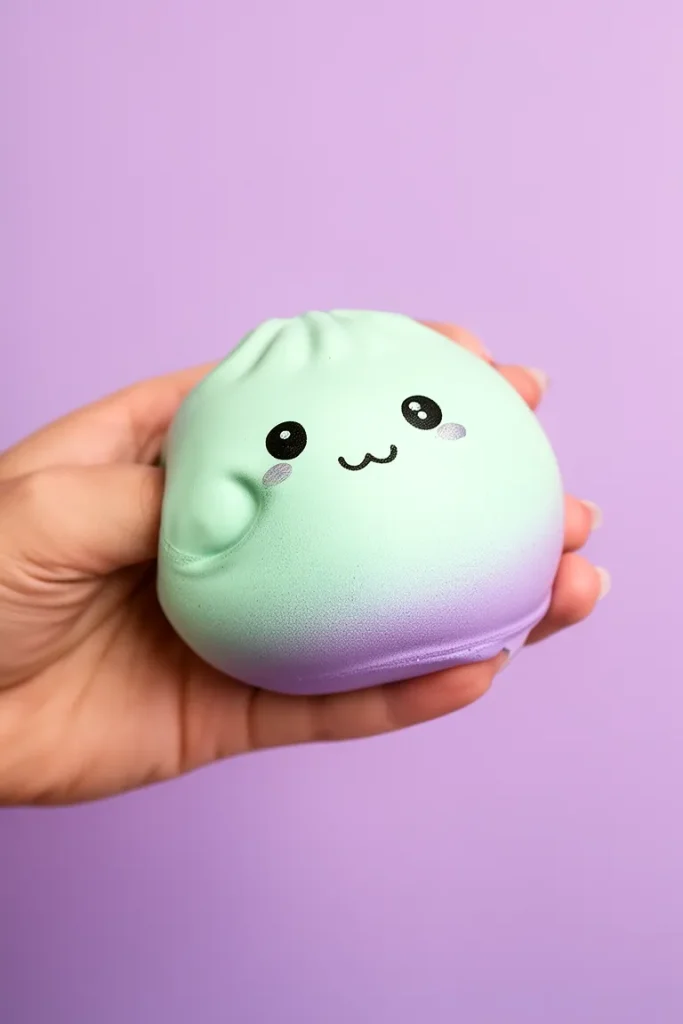
For a lightly squashed dumpling, a hands-only reset is often enough. Warm the foam slightly by holding it in your hands for two to three minutes. Then place it on a clean, dry, flat surface and use the pads of your fingers to roll the dented area outward. Work in small circles, pressing gently as though you were smoothing out dough. Do not dig in with your nails or stretch the foam to the side, because slow-rise foam is soft and can tear under sharp pressure.
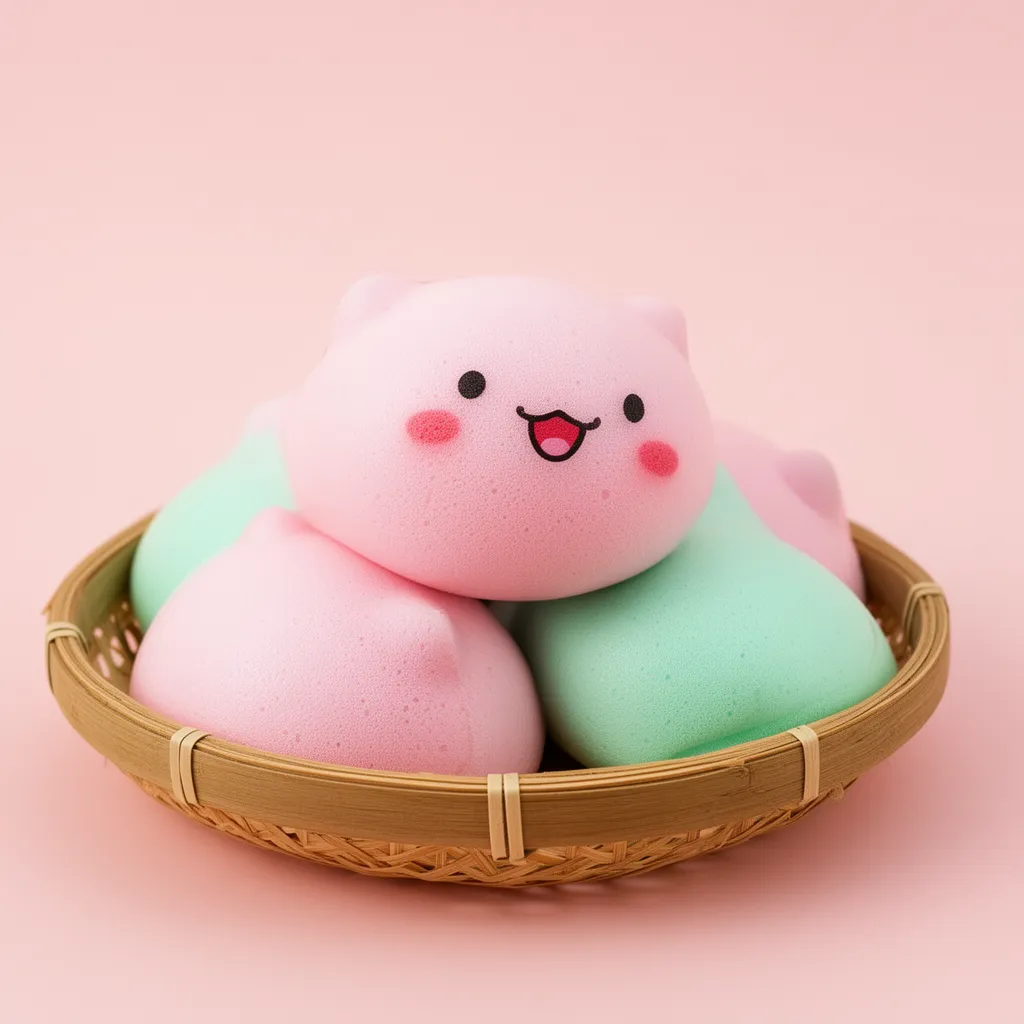
After a minute or two of circular massage, roll the whole squishy between your palms like a ball. This helps redistribute the foam evenly. This technique works particularly well on solid-colour shapes such as the Soft Pink Dumpling Squishy. Once you have worked the dented area, set the squishy on its roundest side and let it rest for one to two hours. Flip it halfway through so the underside does not develop a flat spot.
Warm Water Soak for Stubborn Creases and Squashed Sides
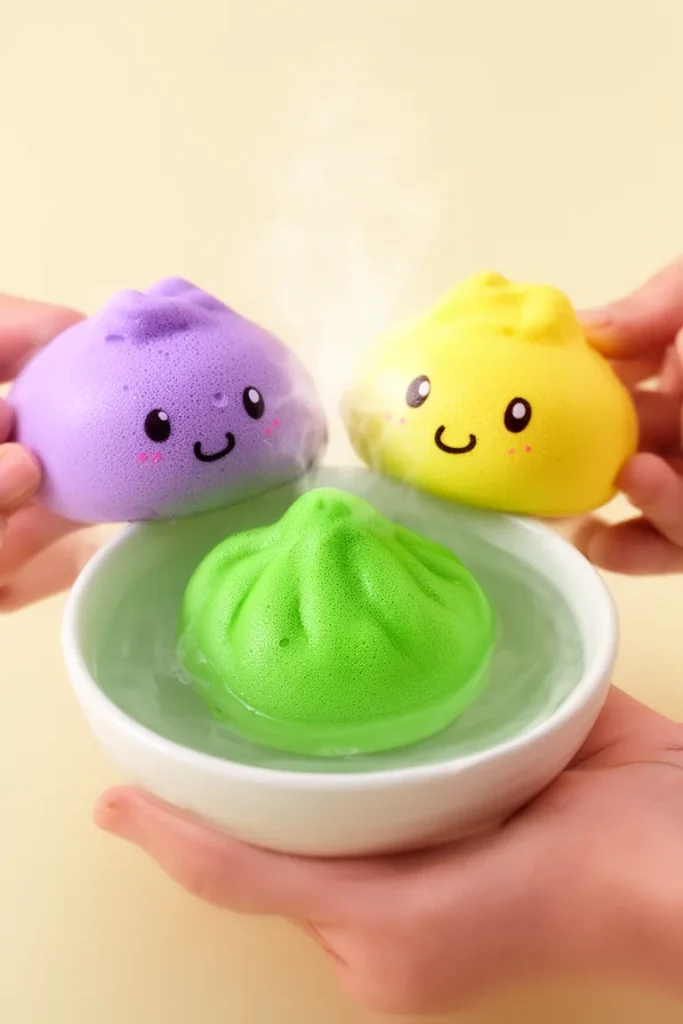
If the squishy is still flat or has a deep fold after the dry massage, warm water is your next step. Fill a bowl with tap water that feels comfortably warm to the inside of your wrist. It should not be steaming or too hot to hold your hand in. Fully submerge the Fresh Green Dumpling Squishy or whichever slow-rise shape you are restoring, and leave it for 10 minutes. The warmth softens the foam and makes it easier for the compressed air pockets to reopen.
While the squishy is still underwater, squeeze it gently a few times so the water moves through the foam. This is only for plain slow-rise foam squishies, not for squishies with electrical parts or fabric plush shells. After 10 minutes, lift it out and press it lightly between two clean, dry towels. Do not wring, twist or pull the foam. While it is still damp, roll it gently in your palms to encourage a rounder shape, then place it on a dry towel in a well-ventilated spot. Let it air dry for 12 to 24 hours, flipping it every few hours. Keep it away from radiators, windowsills and direct sunlight, because heat can shrink or warp the foam.
Step-by-step warm water reset
- Fill a bowl with warm tap water that feels comfortable on your wrist.
- Submerge the moulded slow-rise squishy for 10 minutes.
- Squeeze it very gently underwater so the foam absorbs warmth evenly.
- Press it between two clean towels without wringing or twisting.
- Roll it lightly in your palms while it is still damp.
- Leave it to air dry for 12 to 24 hours, flipping it every few hours.
Low-Heat Hairdryer: A Quick Fix for Deep Dents
For a deep dent that does not respond to warm water, a low-heat hairdryer can speed up recovery. Set the hairdryer to its lowest heat and lowest fan setting. Hold the nozzle about 15 to 20 cm away from the dent and keep it moving constantly. With your other hand, massage the dented area gently while the warm air passes over it. Work in 20 to 30 second bursts, then stop and check the shape. If the foam feels too warm for your hand, move the hairdryer further away or stop.
This method should be used sparingly, because concentrated heat can damage the finish. Be extra careful with glitter and sparkle finishes, where high heat may soften decorative layers. Never use a heat gun, iron or boiling kettle. The goal is a gentle warm breeze, not a blast of hot air. After each burst, let the squishy rest for five minutes before deciding whether another pass is needed. If the dent remains after two short bursts, return to the warm water soak rather than applying more heat.
Aftercare: Keep Your Squishy Plump and Slow-Rise Ready
A squished squishy is easier to prevent than to repair. Store your dumplings upright or side by side on a shelf, rather than piled under heavier toys. If you carry one in a bag, place it in a small pouch that does not press on the foam. For giant dumpling squishies, avoid resting anything on top of them, because their larger surface area takes longer to recover when compressed. Rotate your display every few weeks so the same side is not always squashed against the shelf.
If your collection includes squishy plushies, remember that they are filled and sewn, not moulded from a single block of foam. The warm water soak and hairdryer methods above are not suitable for plush squishies. For plush styles, stick to spot cleaning and gentle reshaping with your hands. When a slow-rise foam dumpling finally loses its bounce after lots of love, it may be time to treat yourself to a fresh one from the shop.
Mini FAQ: Squished Squishy Quick Answers
Can I use boiling water to make my squishy spring back faster?
No. Boiling water can distort or harden the foam and may damage the surface. Warm tap water is enough to soften the material gently.
How long should I leave a squished squishy to dry?
Most slow-rise dumplings need 12 to 24 hours to dry completely after a warm water soak. Do not squeeze it again until the inside feels completely dry to the touch.
Will the water method work on a squishy plushie?
No, squishy plushies should not be soaked. Spot clean the fabric and reshape the filling with your hands only. Reserve the warm water method for moulded slow-rise foam dumplings.
Bring Back the Bao Bounce
A squashed squishy is usually a five-minute fix, not a reason to panic. With gentle massage, warm water and a little patience, your kawaii dumpling can look plump and round again. If a crease will not budge or you simply want to add a new character to your shelf, browse the mystery dumpling boxes for a surprise slow-rise treat.